
House budget plan would cut $51.5 million in funding for child care centers that serve low-income and foster families
BY: Steph Quinn
Missouri Independent
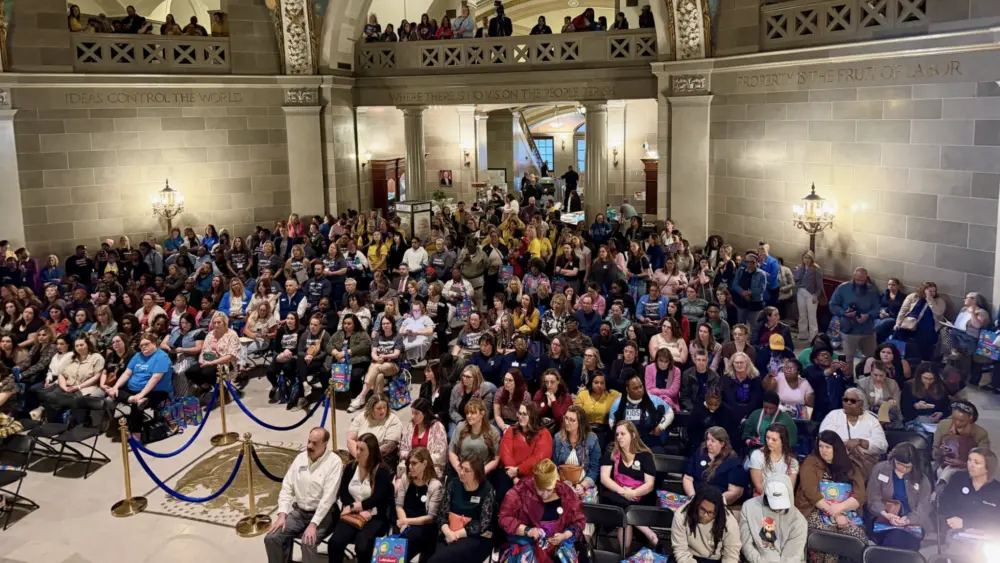
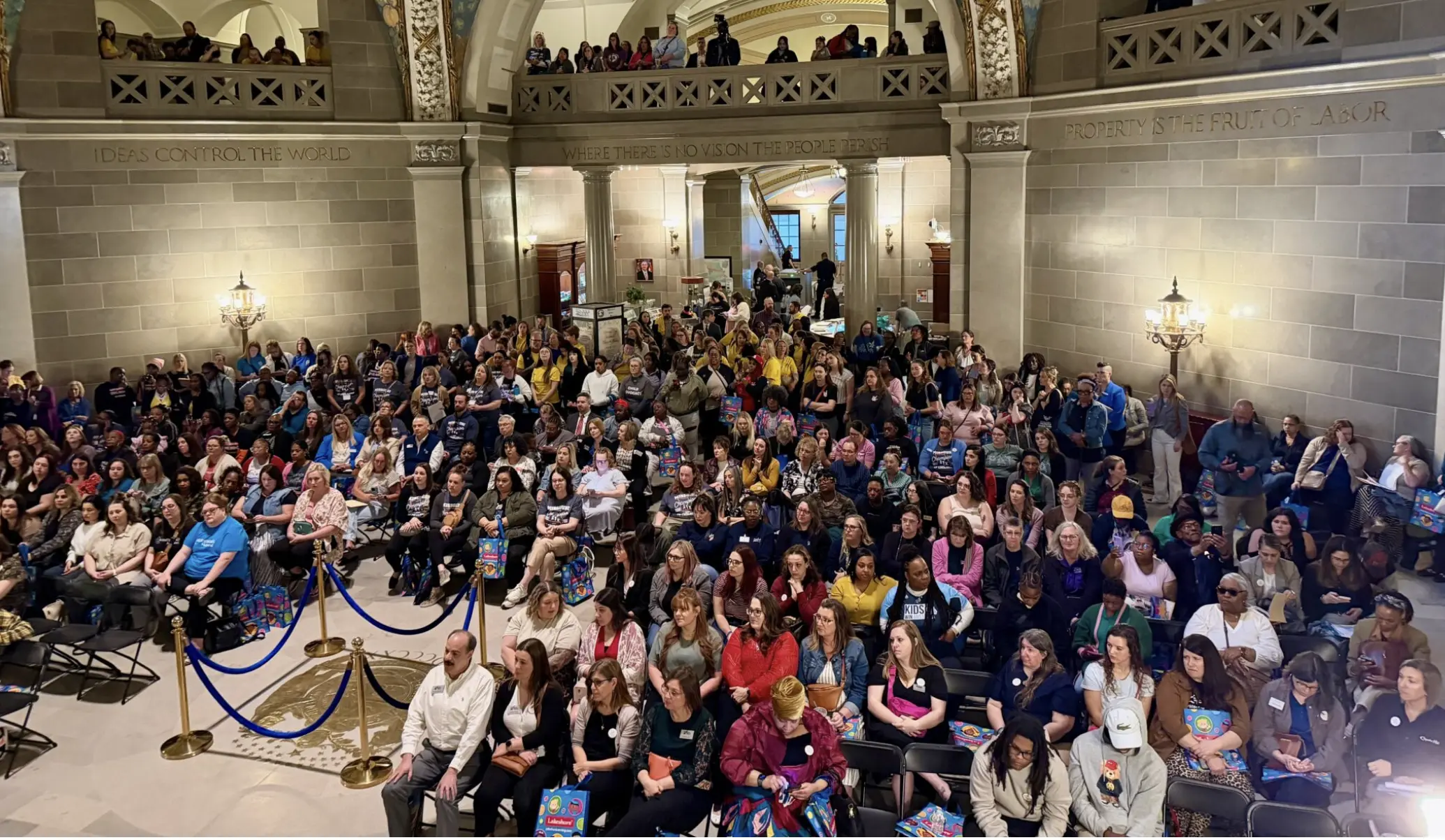
Hundreds of child care providers, parents and child advocates rallied in the Missouri Capitol Wednesday, a day after the House signed off on $51.5 million in cuts to the state’s child care subsidy program.
The proposed budget, which needs another roll call vote in the House before heading to the Senate, would also derail plans for the state to start paying subsidies to child care providers at the beginning of the month based on enrollment, instead of at the end of the month after providers report children’s attendance.
Providers and parents who attended the Child Advocacy Day rally said problems of funding instability and scarcity of affordable, quality child care are not new. They emphasized the importance of the subsidy program, which uses state and federal funds to help bring child care within reach of low-income and foster families.
But as the state faces a looming fiscal cliff, efforts to restore the cuts and clear the way to implement enrollment-based payments face obstacles. Senate leaders have not yet embraced either step, and the House budget would block the payment change from taking effect.
The average annual cost of child care for an infant in Missouri is $13,780, according to Child Care Aware of Missouri. For a 4-year-old, it’s $9,568. And 78 of Missouri’s 114 counties are child care deserts, where there are more than three times as many children ages 5 and under as there are licensed child care slots.
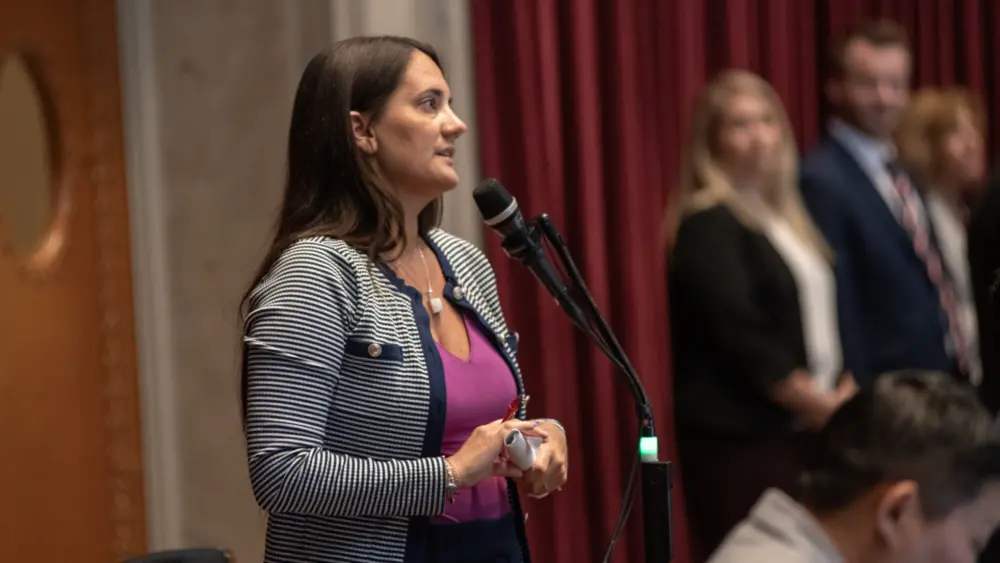
Deidre Anderson-Barbee, assistant commissioner of the Missouri Office of Childhood, told those attending the rally that child care accessibility is integral to the state’s “economic strength” and “workforce stability.”
“These are not separate issues,” she said. “They are deeply connected.”
The House budget plan, laid out by Republican state Rep. Dirk Deaton of Seneca, chair of the House Budget Committee, would close a nearly $2 billion deficit by using most of the surplus in the state’s general revenue fund.
Senate Appropriations Chairman Rusty Black, a Republican from Chillicothe, told The Independent that it’s too soon to discuss the prospects of restoring funding for the subsidy program.
“We’re going to work through the budget on this side,” Black said. “[Other] people have priorities as well, and we’ll see what it looks like as we go through.”
Democratic state Sen. Maggie Nurrenbern of Kansas City said she is “very hopeful” that the Senate will be able to restore the cuts in its version of the budget.
“I will work tirelessly to make that happen,” said Nurrenbern, who serves on the appropriations committee.
Ciere Hunter, director of Magical Minds Child Care in St. Louis, told The Independent that her center participates in the subsidy program to allow parents to work.
“A lot of them are paycheck to paycheck trying to manage a whole household,” Hunter said. “So they really do need that assistance…to keep the roofs over their children’s heads.”
The subsidy program is available only to low-income families who earn up to 150% of the federal poverty level.
In addition to the basic subsidy rate, centers currently receive “rate enhancements” for gaining accreditation, serving foster children or children with special needs or — like Hunter’s center — for serving mostly low-income families.
Deaton’s budget plan would eliminate those enhancements. Deaton argued during debate on the budget that they can be cut because they were introduced before the state began compensating providers at 100% of the market rate.
“I’m not reducing a single rate,” Deaton said.
State Rep. Betsy Fogle of Springfield, ranking Democrat on the House Budget Committee, countered that the cuts would “further compound the problem of working families and kids in foster care accessing quality and affordable child care.”
The Missouri Department of Elementary and Secondary Education, which administers the subsidy program, planned to begin paying providers based on enrollment in May.
Hunter said receiving subsidy payments in advance would provide much-needed funding certainty. Her center has to be prepared to serve every child who enrolls in child care, even those who don’t attend. Attendance-based payment means the center doesn’t get compensated for all its work.
“The thing is, whether a kid comes or not, we still have everything accounted for that child,” Hunter said.
Nurrenbern said the plan to implement enrollment-based payment resulted from years of bipartisan work and consultations with providers, child advocates and the department.
“That was direction from the department, from the experts, from those who are in the field of early childhood, asking that the payments be changed,” Nurrenbern said.
But the House budget would “prohibit subsidy payments based on any ‘non-attendance based methodology.” State Budget Director Dan Haug said earlier this month that the state would not make the change in May if Deaton’s recommendation is signed into law.
Nurrenbern said this is “problematic.”
“Providers have to have clarity as to if they’re going to have the money in the door to be able to pay their [employees],” she said. “…If they can’t keep people employed to provide that care, then they’re forced to close their doors. This is why we have seen so many shortages of child care providers.”
Courtney Leader, of Ash Grove, told The Independent that child care scarcity had a permanent impact on her daughter’s life.
As an infant, her daughter was on a waiting list for a child care center “because there’s just not enough spots for all of the children.”
During that time, Leader said, her daughter was shaken by an at-home caregiver and, as a result of her injuries, requires 24-hour care and uses a wheelchair full-time.
“Had she had access to quality, safe child care as an infant,” she said, “her life would look very different now.”