


The minimum levy has been $2.75 since 1993, districts must meet it to qualify for state school aid. The 63 districts at the minimum would have to roll back taxes as assessed values increase
BY: RUDI KELLER
Missouri Independent
A revised property tax overhaul proposes to lower the minimum school levy — the lowest tax a district can impose and still qualify for state aid — by up to 20%, the first cut since Missouri law began mandating a minimum in 1988.
Under a bill sent to the Missouri Senate on Thursday by the House, tax rates currently at the minimum levy of $2.75 per $100 assessed value would would have to roll back their tax rates as property values rise — but only until they hit the proposed new floor of $2.20 per $100.
The bill passed on a bipartisan 133-13 vote.
The bill seeks to control property tax bill increases by “siloing” property classes with separate rates for residential, commercial, agricultural and personal property. A separate bill that would move all property tax elections to November in even numbered years is awaiting House debate.
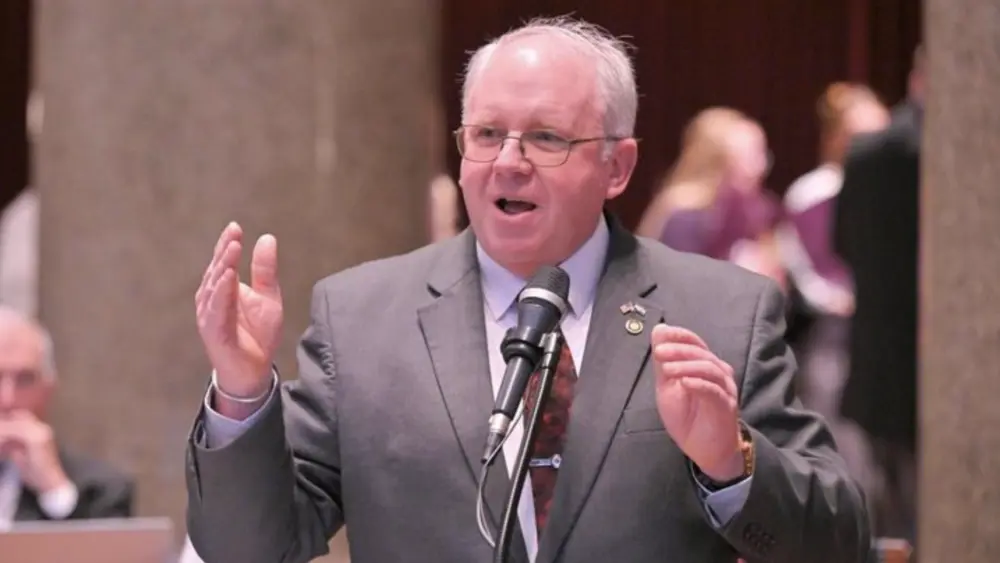
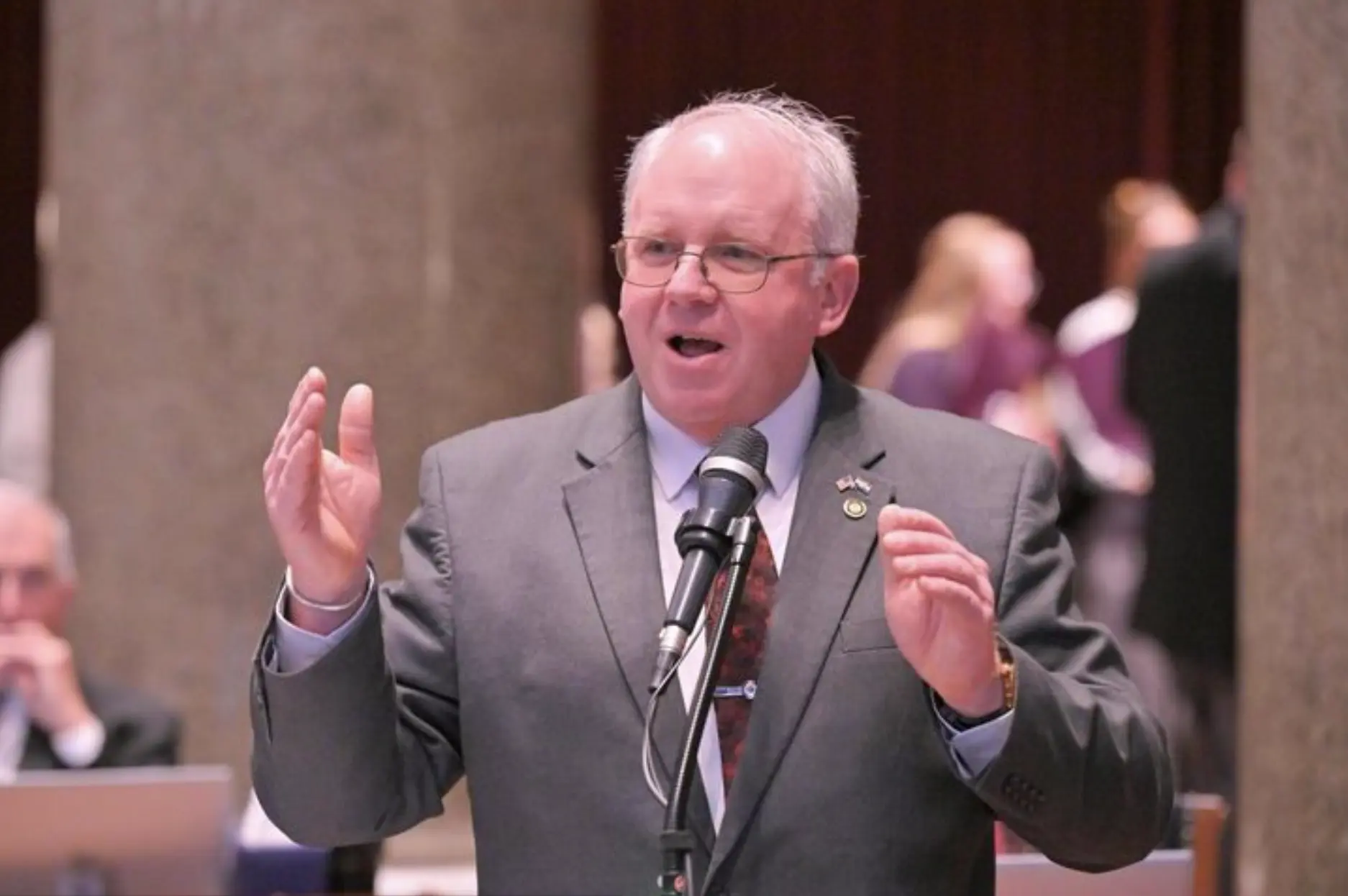
The minimum levy is the lowest rate that can be charged by a school district and still receive state aid through the foundation formula. No district would be required to cut taxes immediately and no rollbacks that would have resulted from previous reassessment cycles would be imposed, the bill’s sponsor, Republican state Rep. Tim Taylor of Bunceton, said during debate on Tuesday.
That will protect current revenue, Taylor said, while promising future relief. School districts currently at the minimum would be subject to the same rules governing other taxing districts, which must reduce rates to avoid a windfall of revenue when assessments increase faster than inflation,
“The schools would remain whole, even with the rollbacks, but they’re not receiving that,” Taylor said. “That has been my goal this whole time, is to allow those districts to lower that floor so that those districts, those folks in the districts, can get that Hancock provision rollback.”
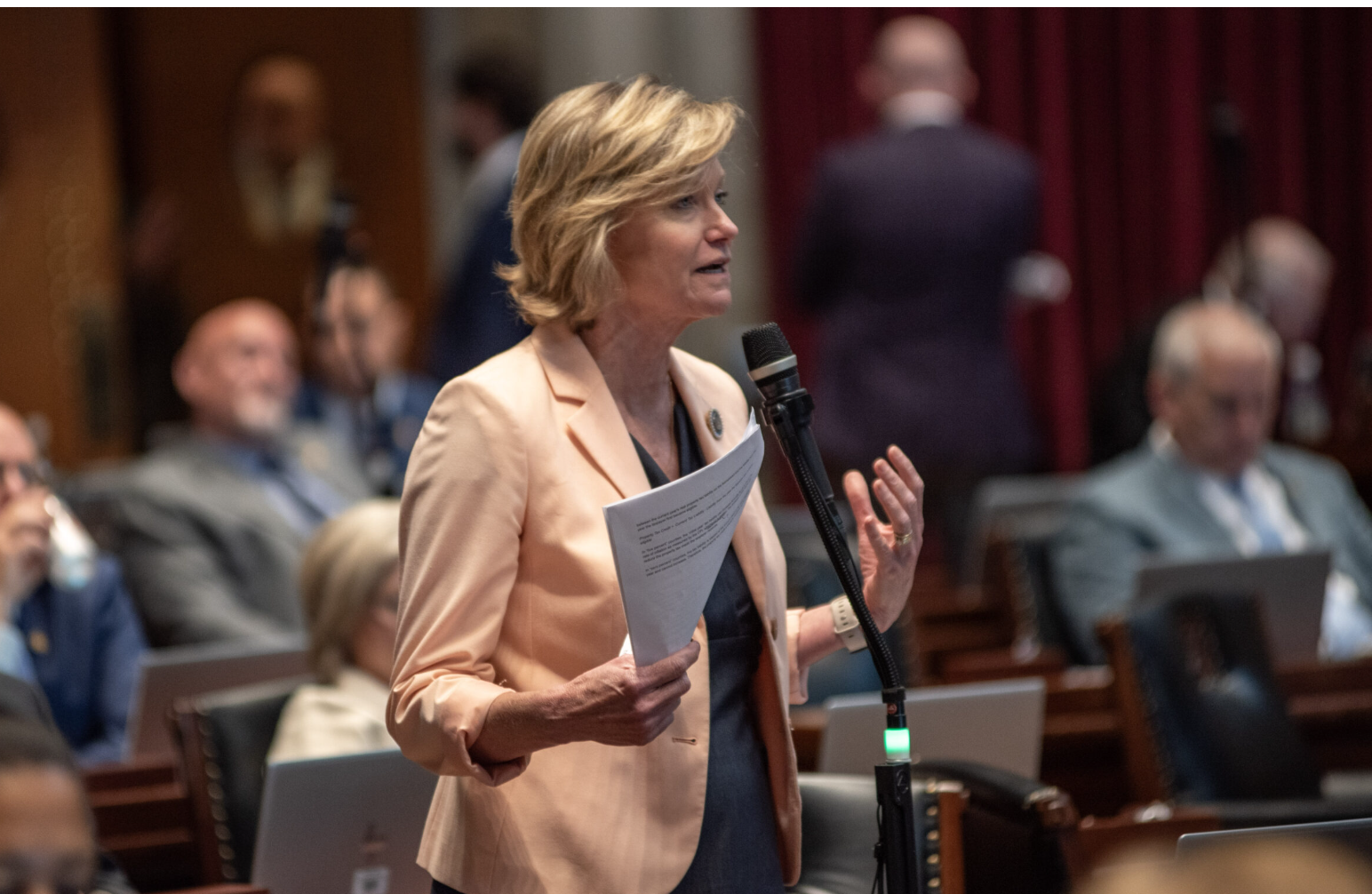
State Rep. Kathy Steinhoff, a Columbia Democrat and former teacher, had been skeptical of the provision lowering the minimum levy during committee debate and voted against the bill. Provisions protecting current revenue make it more palatable, she said.
The issue, she said, is how much should local taxpayers contribute to maintain state support.
“It was kind of that social contract of, you have a minimum levy set to this, and then you will be able to participate in the foundation formula,” Steinhoff said.
Minimum levy history
During debate Tuesday on the property tax bill, no House member knew why there is a minimum school levy at all.
“As far as I understand it, it’s because of the federal funding, the federal reimbursement” that districts receive, Taylor said. “And I’m going to be completely honest, I can’t go into the foundation formula with any knowledge.”
Prior to 1988, there was no minimum local property tax levy for school districts.
The Missouri Constitution at the time allowed school districts to set the rate at $1.25 per $100 assessed value without a public vote but did not require it.
That constitutional limit without a vote became the floor for receiving state aid because two things combined to convince lawmakers and then-Gov. John Ashcroft that it was needed — the enactment of the Hancock Amendment in 1980 and the passage of the 1-cent Proposition C sales tax in 1982.
The Hancock Amendment’s property tax provisions address how local governments should change rates when assessed values rise faster than inflation. It allows the taxing district to capture enough revenue to match inflation and requires rates to be lowered so there is not a windfall of revenue.
The sales tax revenue, which is distributed to schools on a per-pupil basis, had two purposes — half was earmarked as new funds for education, the other half was used to offset lower property tax rates.
By 1987, there were 86 districts below $1.25 per $100 assessed value. Three — two in Ripley County and one in Pulaski County — had no local levy at all, the state auditor’s 1988 annual report on property taxes shows.
The minimum levy was increased five years later as part of a major education bill that revised the school-aid formula. That formula promised each district it would receive funding equal to what its local levy would produce in the district with property wealth equal to 90% of the property value of the state’s wealthiest district.
The higher local voters set a levy, the more state aid the formula would provide.
“It was a levy-driven formula,” said Otto Fajen, lobbyist for the Missouri National Education Association. Fajen was a Senate staffer when the formula revision passed in 1993.
“It was the linchpin by which we addressed equity and adequacy,” Fajen said.
To protect the minimum levy, first state law, then the constitution, were changed to allow districts to remain at $2.75 regardless of how much of a rollback was required by the Hancock Amendment or Proposition C revenue.
The formula was changed again in 2005, but the minimum levy was retained. The local levy rate is no longer the basis for determining how much state aid a district receives.
“The formula doesn’t really care about equity, and so what I would describe as tax rate indifferent to a degree,” Fajen said. “That’s an historical artifact.There’s no current real relevance of that number.”
The state auditor’s annual report on property tax rates shows there were 63 school districts that levied the $2.75 minimum on all property in 2025, and three at that rate on at least one type of property in St. Louis County, where there are separate rates for residential, commercial, agricultural and personal property.
The provisions of the bill address only Hancock Amendment rollbacks, which districts charging above the minimum levy must make when needed.
Most districts have asked — and received — voter permission to waive their Proposition C rollbacks. The bill does not change that and does not require districts to include new Proposition C revenue as part of their rollback calculation.
That is important because Proposition C revenue has increased by about 40% in the past five years, from about $925 million in fiscal 2020 to $1.3 billion in the year that ended June 30.
Proposition C rollbacks are required in statute and lawmakers can write a bill excluding the new minimum from that provision, Taylor said in an interview with The Independent.
Hancock rollbacks are designed to maintain revenue and are part of the constitution, so the law must recognize that, he added.
“The schools would remain whole, even with the rollbacks, but they’re not receiving that,” Taylor said. “That has been my goal this whole time, is to allow those districts to lower that floor so that those districts, those folks in the districts, can get that Hancock provision rollback.”
Lawmakers are changing the minimum levy at the same time a new foundation formula is being crafted by a task force appointed last year by Gov. Mike Kehoe.
During debate, Steinhoff said the interplay between legislation and the task force work is her biggest concern about the property tax bill.
“I am worried that we are going to do something that could totally upset the apple cart that’s being created in another very important task force,” she said.
Property tax increases are one of the biggest public concerns right now, Taylor said, and doing nothing is not an option.
“Until somebody starts it, it’s not going to get done,” Taylor said. “And our taxpayers are asking us to get something done.”
Revised bill
The bill passed Thursday was debated in the House two times. It won preliminary approval in early February, but before it came up for a final vote, flaws in language on tax elections forced a rewrite, and the result was splitting off the election provisions to a separate bill.
The key provision that will provide relief to taxpayers, Taylor said during Tuesday’s debate, is the change that would require separate tax rates for the various types of property.
“It is truly the one thing that is going to bring some relief to our constituents back home, and even to us as individual taxpayers,” he said.
The legislature tried to require separate rates in legislation passed in 2002, but only St. Louis County and the city of Gladstone adopted the voluntary move. Taylor’s bill would make it mandatory in the remaining 113 counties and the city of St. Louis.
Because Hancock rollbacks look at total revenue from a tax levy, when assessed values in one type of property rise rapidly, it shifts the burden to those taxpayers.
“If one of them skyrockets, which we’ve seen, it can be watered down by the other subclasses who may have gone down or remain level, and that says that Hancock shouldn’t kick in,” Taylor said during debate.
The Missouri State Tax Commission has been pushing local assessors to increase appraised values to match market prices for residential and commercial property. At the same time, taxable value of farmland, set by the commission based on productive value, is below what it was in 1985 and values for railroad, pipeline and utility property, also set by the commission, have lagged behind other property.
The additional taxes on residential property because of the shifting burden was one of the biggest concerns raised as Taylor’s committee studying property taxes toured the state last summer, said state Rep. Jim Murphy, a Republican from St. Louis County.
“In the last few years, as we saw residential assessments go up and the other assessments didn’t, it just piled more and more tax burden onto our residential property owners,” Murphy said. “And that was the biggest thing we heard as we traveled this state. The biggest concern we heard from taxpayers…”
“Was that people,” Taylor said as he finished Murphy’s sentence, “would be taxed out of their homes.”