



By RYAN SKAITH
While Missourians typically focus on shoveling snow in February, state emergency officials are urging residents to turn their attention toward a less predictable threat: the ground beneath their feet.
February marks Missouri Earthquake Awareness Month, a period dedicated to preparing for “high-impact, low-frequency” seismic events.
“These types of natural disasters are unpredictable but carry the potential for catastrophic consequences,” said Jim Remillard, director of the State Emergency Management Agency (SEMA). “They require training, planning, and building resilience across the emergency management, business, and transportation sectors.”
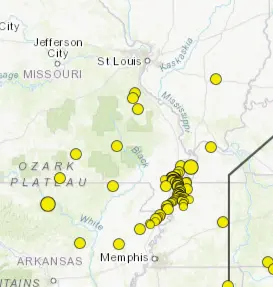
The primary concern is the New Madrid Seismic Zone in southeast Missouri. In the winter of 1811-12, the zone produced some of the most powerful earthquakes in U.S. history. The tremors were so intense they destroyed buildings, rang church bells hundreds of miles away, and caused the Mississippi River to briefly flow backward.
The zone remains active today, averaging more than 200 small, imperceptible earthquakes annually. Experts estimate there is a 25% to 40% chance of a major earthquake occurring within the next 50 years.
Emergency officials recommend several immediate actions for residents, especially those in the state’s southeast corner:
- Practice “Drop, Cover, and Hold On”: In the event of shaking, get under a sturdy table or desk, drop to your knees, and protect your head. Falling debris remains the leading cause of injury in modern buildings.
- Build an Emergency Kit: Kits should sustain a household for several days and include water, nonperishable food, flashlights, first aid supplies, and blankets.
- Secure the Home: Bolt bookcases to wall studs, install latches on cupboards, and secure water heaters to prevent gas leaks or fires. Move heavy objects to lower shelves.
- Create a Communication Plan: Designate an out-of-area contact living at least 100 miles away to serve as a central check-in point for family members.
State officials are also highlighting a significant decline in earthquake insurance coverage. According to the Missouri Department of Commerce and Insurance, coverage in the seven highest-risk counties has plummeted. In 2000, 60% of homes in those areas were covered; by 2024, that number dropped to 10%. Most standard homeowners policies do not include earthquake damage.
For more information, including interactive maps and safety videos, residents can visit the earthquake preparedness section of the SEMA website.